
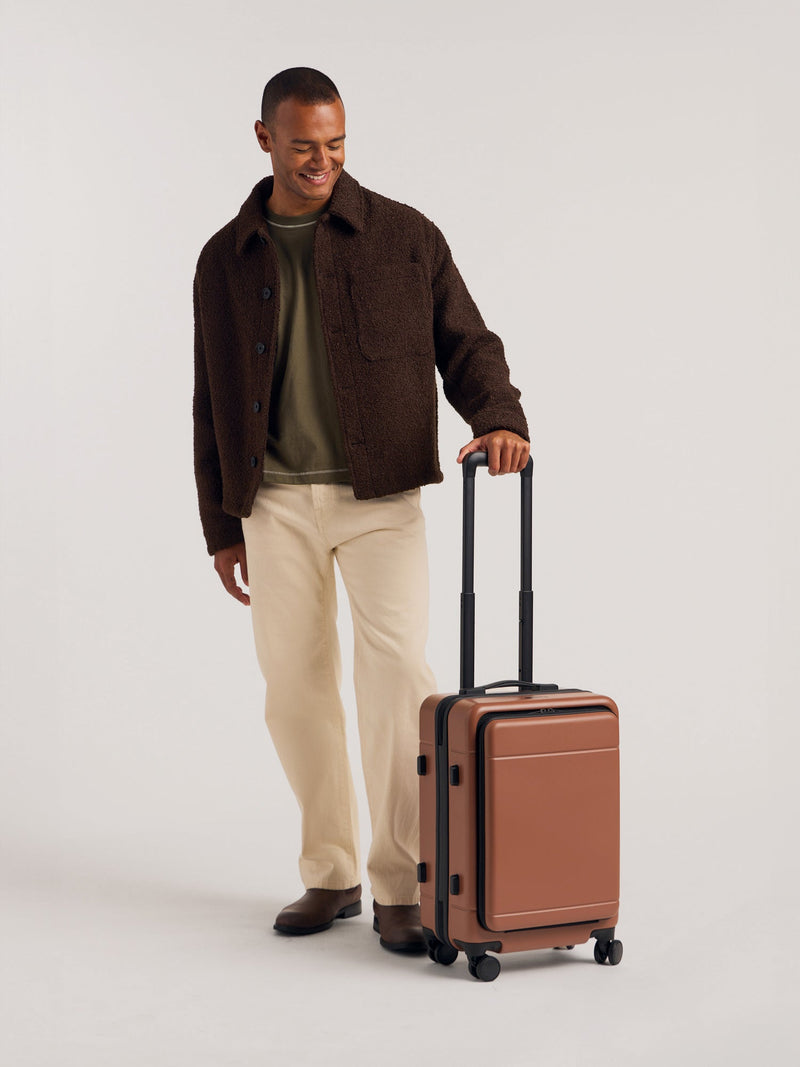
Selecting the right luggage is one of the most crucial decisions for any traveler. Whether you're jetting off internationally, heading out on a weekend getaway, or embarking on a business trip, your choice of luggage can seriously impact your travel experience.
Imagine arriving at your destination only to find your delicate souvenirs in pieces. Or you finally get on the plane after a 2-hour delay, but you find yourself struggling to squeeze your bag into an overhead compartment. The right luggage can prevent these kinds of headaches, making your trips seamless and stress-free.
One of the biggest debates in the travel world is hard vs. soft luggage. Should you go for the durable, rigid shell of hardside luggage, or opt for the flexible, lightweight design of softside luggage?
This guide will help you compare the pros and cons of each type and help you determine if you should go for hard or soft luggage for international travel, weekend getaways, or whatever your next adventure is.
Hard Luggage: Pros and Cons
Hard luggage has gained a loyal following for its sleek look and tough-as-nails protection, making it a favorite for those carrying valuables or navigating unpredictable weather.
However, its rigid structure can be less forgiving when it comes to packing flexibility and storage space. So, is it the perfect fit for your travel needs?
Pros of Hard Luggage
- Superior Protection for Fragile Items: The rigid structure of hard luggage provides excellent protection for breakable items like electronics, glassware, or souvenirs. It safeguards against rough handling, making it ideal for flights where luggage may be tossed around.
- Waterproof or Water-Resistant: Hard luggage is often made of materials like polycarbonate or ABS plastic, which are highly resistant to water. This is especially helpful for shielding your belongings in wet conditions.
- Enhanced Security Features: With built-in TSA-approved locking systems and a tougher exterior, hardside luggage reduces the risk of theft. For travelers carrying valuables, this added security can offer peace of mind.
- Keeps Its Shape When Packed: The structured shell helps the suitcase maintain its exterior shape instead of bulging outward as you pack. That can make its packed dimensions more predictable, especially when you're trying to stay within carry-on size requirements. Just remember to check your airline's specific size restrictions before you fly.
Cons of Hard Luggage
- Limited Storage Flexibility: Unlike softside luggage, hard cases usually don't have external pockets, and their rigid design limits expandability. If you need last-minute storage, this could be a drawback.
- Heavier and Bulkier: While modern materials have reduced the weight of hard luggage, it's generally still heavier than soft luggage. Its bulkier nature can also make it challenging to maneuver in tight spaces.
- Prone to Scuffs and Dents: Though durable, the exterior of hard luggage can show wear and tear more visibly, with scratches and dents often standing out over time.
- Requires More Room to Open: Many hard-shell suitcases use a split-opening design, with belongings packed on both sides of the case. This is worth considering in smaller hotel rooms or other compact spaces.
When to Choose Hard Luggage
- For Protecting Valuables: Hard-shell luggage is ideal for photographers or filmmakers traveling with expensive equipment that needs maximum safety. Hard luggage offers the best protection if you're transporting delicate electronics, cameras, or fragile souvenirs.
- For International Travel: Luggage often faces rougher handling during international flights, making hard cases a safer option.
- For Variable Weather Conditions: Thanks to its water-resistant qualities, hard luggage is perfect for destinations with unpredictable weather.
If you've decided hard luggage is the right choice for your next trip, CALPAK has some excellent options. Check out the Ambeur Carry-On Luggage in Black or the best-selling Hue Carry-On Luggage in Juniper that has an expandable design.
Soft Luggage: Pros and Cons
Soft luggage is like the trusty old friend of the travel world — lightweight, adaptable, and always ready to roll. If you're all about versatility and convenience, softside luggage might just be your go-to.
Let's break it down with the good, the not-so-good, and when you should give it the spotlight.
Pros of Soft Luggage
- Lightweight and Easy to Maneuver: Nobody likes being weighed down by a heavy bag! Soft luggage is a breeze to carry, especially when you're darting through busy airports or squeezing through train cars.
- Expandable and Flexible Storage: Need to fit in those last-minute souvenirs? Soft luggage has your back with its external pockets and adjustable sections. Easy access and extra room? Yes, please!
- Compact and Space-Saving: If you're squeezing your bag into a tiny rental car trunk or an overhead compartment, softside luggage is more forgiving than hard suitcases, making it a dream for tight spaces. That flexibility can also make it easier to position in compact hotel rooms or tighter storage spaces between trips.
Cons of Soft Luggage
- Less Protection for Fragile Items: If you're carrying anything delicate, soft luggage isn't the best bodyguard. Its flexible material won't offer much defense against bumps and drops.
- Not Water-Resistant: Got caught in the rain? Soft luggage doesn't do well in wet conditions, so your stuff could get a bit soggy.
- Lower Security: Unlike hard luggage, soft luggage options can be easier to cut into, which might make you feel uneasy in places where theft could be an issue.
When To Choose Soft Luggage
- For Shorter Trips: Heading out for a quick weekend getaway? The lightweight and flexible design of soft luggage makes it the perfect choice.
- For Road Trips: If you're the one handling your bags, soft luggage is ideal for maximizing space and adapting to your packing needs on journeys where room in the trunk is limited.
- For Travelers Who Crave Adaptability: Love having extra compartments and expandable features? Soft luggage delivers the goods every time.
Whether you're packing light or squeezing in some extras, soft luggage is all about keeping things easy and stress-free. Explore CALPAK's range of soft-shell luggage, including the Luka Soft-Sided Carry-On Luggage in Oatmeal, which features multiple handy pockets while the Luka Soft-Sided Mini Carry-On Luggage can fit under any airplane seat.
Factors to Consider When Choosing Between Hard and Soft Luggage
Ultimately, your choice about who wins in the hardside vs. softside luggage debate will depend on a variety of factors. Think about your travel habits, preferred style, destination, and how much you plan to pack (or how much you want to bring home).
Do you go sleek and sturdy with hard luggage or practical and pliable with soft luggage? Here's the lowdown on what to consider before choosing hard vs. soft luggage.
Hard vs. Soft Luggage Materials
The material of your suitcase can influence its weight, flexibility, durability, and even how you pack. Hard-shell luggage typically uses rigid materials like polycarbonate or ABS, while soft-sided luggage is made with flexible woven fabrics. Think about what works best for your travel style: a rigid material helps your suitcase hold its shape, while flexible fabric gives you more freedom when packing or fitting your luggage into tighter spaces.
Weight and Portability
If you're a pack-it-all kind of person, soft luggage often wins the weight battle. Lightweight and easy to maneuver, it allows you to toss in those extra shoes or souvenirs without tipping the airline scales.
On the flip side, hard luggage tends to be a bit heavier, but it rolls like a dream with smooth wheels and ergonomic handles.
Durability and Longevity
Your suitcase's construction and material both play a role in how it handles the journey. Hard-shell luggage has a rigid exterior that helps it hold its shape, while soft-sided luggage offers more flexibility as you pack. Whichever you prefer, look at the specific materials and construction rather than assuming every hard or soft suitcase will perform the same way.
Security and Protection
When it comes to protecting valuables, hard luggage provides a secure shell that resists punctures and often includes integrated TSA locks.
Soft luggage, while not impenetrable, compensates with lockable zippers and additional compartments to keep items discreetly tucked away.
Storage Flexibility
Softside luggage wins for versatility. With external pockets and expandable sections, soft luggage is ideal for last-minute additions or squeezing into tight spaces.
However, while hard-sided luggage is less forgiving when it comes to flexibility, it excels at keeping items neatly organized and protected, especially for fragile or wrinkle-prone belongings.
Think beyond what fits inside your suitcase, too. Storage flexibility matters when the trip is over. Depending on its construction, soft-sided luggage may be easier to fit into a packed closet or other tight storage area at home. Hard-shell luggage maintains its shape, so you'll need a more fixed amount of space to store it between trips.
Hard vs. Soft Luggage: Which Should You Choose?
When it comes to the hard vs. soft luggage showdown, the winner depends entirely on you and your travel style. If you're after unbeatable durability, superior protection, and a polished look, hardside luggage is your go-to. On the other hand, if you value lightweight portability, flexible storage, and easy adaptability, softside luggage is a trusted ally.
Think about your typical trips: Are you jetting off on long-haul flights with fragile souvenirs, or are you packing light for a quick weekend escape? Both types of luggage have their perks, so it's all about matching the features to your needs.
Whether you're Team Hard Luggage or Team Soft Luggage, choosing the right travel companion ensures your journeys are smoother, more organized, and maybe even a bit more stylish.
Whatever you choose, CALPAK has you covered. Whether you're exploring bustling city streets or venturing into rugged landscapes, we have something for every kind of traveler.
Explore our collections of premium hardside or softside luggage options designed to suit every travel style. Shop All CALPAK's Hard and Soft-Sided Luggage options to elevate your travel game today!
Safe travels and happy packing!
Frequently asked questions
Are hard or soft suitcases better?
Neither is universally better. Hard-shell luggage offers a rigid structure and added protection, while soft-sided luggage provides more flexibility and can be easier to fit into tight spaces.
Can you fit more in a hard or soft suitcase?
Soft-sided luggage can offer more packing flexibility thanks to its flexible construction, exterior pockets, and expandable designs. Hard-shell luggage maintains its shape, which can help keep packed dimensions more predictable.
What are the disadvantages of hard side luggage?
Hard-sided luggage is less flexible when fitting into tight spaces and typically requires more room to open because of its split-case design. Its rigid shape can also require more fixed storage space at home.
Do hard shell suitcases break easily?
Hard-shell suitcases are designed with a rigid exterior, but durability varies based on the material, construction, and how the suitcase is handled. Look at the specific suitcase materials and features rather than assuming all hard-shell luggage performs the same way.
Do airlines prefer hard or soft luggage?
Airlines generally focus on luggage size and weight requirements rather than whether a suitcase is hard or soft. Always check your airline’s specific baggage restrictions before traveling.


