Log in / Register






Search


Choosing luggage starts with more than size and color. The material of your suitcase shapes how it moves, packs, protects, and wears over time. When comparing polycarbonate vs aluminum luggage, travelers are often weighing durability, weight, style, and long-term value.
Quick answer: choose polycarbonate if you prioritize lightweight durability and flexibility. Choose aluminum if you prioritize maximum protection and a distinctive look. Both materials are durable, but they perform differently under impact.
In this guide, we’ll compare aluminum vs polycarbonate luggage by weight, durability, packing space, cost, design, and best use case so you can find the suitcase that fits how you move.
Choosing luggage starts with more than size and color. The material of your suitcase shapes how it moves, packs, protects, and wears over time. When comparing polycarbonate vs aluminum luggage, travelers are often weighing durability, weight, style, and long-term value.
Quick answer: choose polycarbonate if you prioritize lightweight durability and flexibility. Choose aluminum if you prioritize maximum protection and a distinctive look. Both materials are durable, but they perform differently under impact.
In this guide, we’ll compare aluminum vs polycarbonate luggage by weight, durability, packing space, cost, design, and best use case so you can find the suitcase that fits how you move.
When choosing between polycarbonate vs aluminum luggage, the best option depends on what matters most: a lighter carry, a stronger shell, a certain look, or a suitcase that balances all three.
| Factor | Polycarbonate Luggage | Aluminum Luggage |
|---|---|---|
Weight |
Generally lighter |
Typically heavier |
Durability |
Flexible and impact-resistant |
Rigid and highly protective |
Scratch Resistance |
May show surface scratches |
May show scratches and scuffs |
Dent Resistance |
Flexes under pressure |
Can dent on impact |
Packing Capacity |
More weight allowance for packing |
Heavier shell may limit packing weight |
Cost |
Often more accessible |
Usually higher upfront investment |
Appearance |
Sleek, versatile, colorful |
Structured, polished, distinctive |
Best Traveler Type |
Frequent travelers, families, carry-on users |
Business travelers, design-focused travelers |
Polycarbonate is a lightweight, flexible hard-shell material commonly used in modern hardside luggage. It is designed to absorb impact by flexing under pressure instead of staying completely rigid.
So, is polycarbonate luggage durable? Yes, polycarbonate is widely used for travel because it can handle everyday movement, airport handling, and frequent packing without adding unnecessary weight. Its flexibility helps reduce the chance of cracking compared with more rigid materials.
Polycarbonate luggage is a smart choice for travelers who want ease without sacrificing structure. It is lightweight for smoother maneuverability, flexible enough to absorb impact, and often gives you more usable packing weight than heavier materials. It also comes in a wide range of colors and finishes, which makes it easy to match your luggage to your travel style.
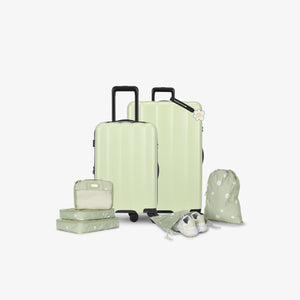
For carry-on travelers, a hard shell can feel especially practical when lifting into overhead bins, rolling through terminals, or packing for a few days away. The Hue Collection and Evry Collection are great examples of design-forward luggage made for everyday movement and faraway plans.
Polycarbonate is a lightweight, flexible hard-shell material commonly used in modern hardside luggage. It is designed to absorb impact by flexing under pressure instead of staying completely rigid.
So, is polycarbonate luggage durable? Yes, polycarbonate is widely used for travel because it can handle everyday movement, airport handling, and frequent packing without adding unnecessary weight. Its flexibility helps reduce the chance of cracking compared with more rigid materials.
Polycarbonate luggage is a smart choice for travelers who want ease without sacrificing structure. It is lightweight for smoother maneuverability, flexible enough to absorb impact, and often gives you more usable packing weight than heavier materials. It also comes in a wide range of colors and finishes, which makes it easy to match your luggage to your travel style.
For carry-on travelers, a hard shell can feel especially practical when lifting into overhead bins, rolling through terminals, or packing for a few days away. The Hue Collection and Evry Collection are great examples of design-forward luggage made for everyday movement and faraway plans.


 Polka dot

Aluminum luggage is made with a rigid metal shell that gives it a structured, elevated look. It is often associated with premium luggage because of its protective feel, polished finish, and long-lasting construction.
Travelers often choose aluminum for strong exterior protection, a distinctive appearance, and a more structured suitcase experience. It is especially popular among frequent flyers and business travelers who want luggage that feels polished and protective from the first trip to the next.
Aluminum luggage is made with a rigid metal shell that gives it a structured, elevated look. It is often associated with premium luggage because of its protective feel, polished finish, and long-lasting construction.
Travelers often choose aluminum for strong exterior protection, a distinctive appearance, and a more structured suitcase experience. It is especially popular among frequent flyers and business travelers who want luggage that feels polished and protective from the first trip to the next.


Polycarbonate generally weighs less than aluminum, which can make a meaningful difference when packing for flights. A lighter suitcase is easier to lift into overhead bins, roll across long terminals, and carry up stairs. For travelers trying to maximize airline weight limits, this can leave more room for what you actually want to bring.
Both materials are durable, but they handle impact differently. Polycarbonate flexes, which helps it absorb pressure. Aluminum is rigid, which gives it strong structure but can make dents more visible after impact. When comparing polycarbonate vs aluminum luggage, think about whether you prefer a suitcase that bends with the journey or one that holds a more structured form.
Luggage should make movement feel easier. Polycarbonate’s lighter build can help when rolling through airports, lifting into overhead bins, and navigating train stations or city streets. Aluminum offers a strong, grounded feel, though the extra weight may be more noticeable on longer travel days.
Every suitcase collects signs of the places it has been. Aluminum may dent or scuff over time, while polycarbonate may show surface scratches. Neither is necessarily a dealbreaker. For many travelers, those marks become part of the luggage’s story.
Packing space is not just about interior dimensions. It is also about how much weight your suitcase itself takes up. Polycarbonate’s lighter shell may give travelers more flexibility when packing clothing, shoes, and travel essentials. Pairing luggage with packing cubes or compression packing cubes can help make either suitcase material feel more organized from the start.
Aluminum has a sleek, structured look that feels timeless and refined. Polycarbonate offers more variety in color, finish, and silhouette, making it a strong choice for travelers who see luggage as part of their personal style. CALPAK designs travel pieces that balance form and function, so your suitcase works hard without blending in.
Aluminum luggage typically costs more upfront. Polycarbonate often offers a balance of durability, lighter weight, and accessibility. If you travel often, the right choice comes down to what you value most: premium structure, lightweight flexibility, or a suitcase that supports the way you already pack and move. If timing your purchase is also part of the decision, our guide to the best time to buy luggage can help you make the most of your investment.
Frequent flyers usually need luggage that can keep up with repeated airport handling, tight connections, and efficient packing. Lightweight carry-on luggage or a coordinated luggage set can make regular travel feel more streamlined.
For shorter trips, polycarbonate is often a practical choice because it is lightweight, easy to move, and simple to pack. It works well for travelers who want to get out the door quickly and still bring options. Explore our weekender bags to pair with your luggage.
Longer journeys call for durability, packing space, and dependable handling. Checked luggage, medium luggage, or large luggage can help support extended packing lists while keeping everything in one organized place.
If design is a deciding factor, both materials have their moment. Aluminum feels classic and architectural, while polycarbonate gives you more room to play with color and finish. Either way, your luggage can feel like an extension of how you travel.
Families often need luggage that is easy to lift, roll, and manage alongside everything else. Polycarbonate can be helpful because of its lighter weight and flexible shell, especially when multiple suitcases are moving at once. Check out our family travel tips blog before your next journey.
Choose polycarbonate if you prioritize lighter luggage, travel with a carry-on often, lift your suitcase into overhead bins, or want a durable hard shell without extra weight. It is also a strong choice if you prefer versatile colors and finishes. For travelers comparing polycarbonate vs aluminum luggage, polycarbonate often feels like the easier everyday option.
Choose aluminum if you prioritize premium construction, structured protection, and a distinctive design. It may also suit frequent business travelers or anyone who wants luggage with a polished, timeless look. So, is aluminum luggage worth it? It can be, especially if durability, appearance, and long-term performance matter more to you than minimizing weight.
There is no one-size-fits-all answer. The right luggage material should support how you move, pack, and explore. Polycarbonate is ideal for travelers who want lightweight durability and flexibility, while aluminum is a strong option for those who prefer maximum protection and a standout look.
Whether you are drawn to lightweight flexibility or elevated durability, hard-shell luggage can make every journey feel more considered.
Polycarbonate generally weighs less than aluminum, which can make a meaningful difference when packing for flights. A lighter suitcase is easier to lift into overhead bins, roll across long terminals, and carry up stairs. For travelers trying to maximize airline weight limits, this can leave more room for what you actually want to bring.
Both materials are durable, but they handle impact differently. Polycarbonate flexes, which helps it absorb pressure. Aluminum is rigid, which gives it strong structure but can make dents more visible after impact. When comparing polycarbonate vs aluminum luggage, think about whether you prefer a suitcase that bends with the journey or one that holds a more structured form.
Luggage should make movement feel easier. Polycarbonate’s lighter build can help when rolling through airports, lifting into overhead bins, and navigating train stations or city streets. Aluminum offers a strong, grounded feel, though the extra weight may be more noticeable on longer travel days.
Every suitcase collects signs of the places it has been. Aluminum may dent or scuff over time, while polycarbonate may show surface scratches. Neither is necessarily a dealbreaker. For many travelers, those marks become part of the luggage’s story.
Packing space is not just about interior dimensions. It is also about how much weight your suitcase itself takes up. Polycarbonate’s lighter shell may give travelers more flexibility when packing clothing, shoes, and travel essentials. Pairing luggage with packing cubes or compression packing cubes can help make either suitcase material feel more organized from the start.
Aluminum has a sleek, structured look that feels timeless and refined. Polycarbonate offers more variety in color, finish, and silhouette, making it a strong choice for travelers who see luggage as part of their personal style. CALPAK designs travel pieces that balance form and function, so your suitcase works hard without blending in.
Aluminum luggage typically costs more upfront. Polycarbonate often offers a balance of durability, lighter weight, and accessibility. If you travel often, the right choice comes down to what you value most: premium structure, lightweight flexibility, or a suitcase that supports the way you already pack and move. If timing your purchase is also part of the decision, our guide to the best time to buy luggage can help you make the most of your investment.
Frequent flyers usually need luggage that can keep up with repeated airport handling, tight connections, and efficient packing. Lightweight carry-on luggage or a coordinated luggage set can make regular travel feel more streamlined.
For shorter trips, polycarbonate is often a practical choice because it is lightweight, easy to move, and simple to pack. It works well for travelers who want to get out the door quickly and still bring options. Explore our weekender bags to pair with your luggage.
Longer journeys call for durability, packing space, and dependable handling. Checked luggage, medium luggage, or large luggage can help support extended packing lists while keeping everything in one organized place.
If design is a deciding factor, both materials have their moment. Aluminum feels classic and architectural, while polycarbonate gives you more room to play with color and finish. Either way, your luggage can feel like an extension of how you travel.
Families often need luggage that is easy to lift, roll, and manage alongside everything else. Polycarbonate can be helpful because of its lighter weight and flexible shell, especially when multiple suitcases are moving at once. Check out our family travel tips blog before your next journey.
Choose polycarbonate if you prioritize lighter luggage, travel with a carry-on often, lift your suitcase into overhead bins, or want a durable hard shell without extra weight. It is also a strong choice if you prefer versatile colors and finishes. For travelers comparing polycarbonate vs aluminum luggage, polycarbonate often feels like the easier everyday option.
Choose aluminum if you prioritize premium construction, structured protection, and a distinctive design. It may also suit frequent business travelers or anyone who wants luggage with a polished, timeless look. So, is aluminum luggage worth it? It can be, especially if durability, appearance, and long-term performance matter more to you than minimizing weight.
There is no one-size-fits-all answer. The right luggage material should support how you move, pack, and explore. Polycarbonate is ideal for travelers who want lightweight durability and flexibility, while aluminum is a strong option for those who prefer maximum protection and a standout look.
Whether you are drawn to lightweight flexibility or elevated durability, hard-shell luggage can make every journey feel more considered.